Preparation is key…
Another LD endurance ride weekend is in the books. I rode Atlas, as I'm working on bringing down his anxiety at rides, so it goes to reason that I ride him at a race!
Of course, being me and having 25 miles to cover each day, I think a lot. I have done A LOT of different horse activities. I see some similar threads across all of the activities, as well as unique qualities in some of them.
I realize there can be things to learn in each... perhaps something you want to add to your program, or something you don't. But you learn nonetheless, if you're open to it.
The things I learned or became more aware of this weekend with Atlas surprised me because this is not a season of chasing education as I have in the past. Education is finding me instead. Even reiterations of things I knew, but can see in a different context. Most of these things I do and have done for showing and working situations.....In no particular order:
Fighting with or lashing out at an anxious horse will not help. Ever. Does it help with children? Of course not. Then it won't help with horses.
Preparation is extremely beneficial. The obvious for an endurance ride is fitness, but other things can be just as critical:
Clear communication with your horse in all aspects: on the ground and in the saddle.
Methods to help a nervous horse relax both on the ground and in the saddle. A nervous horse is not in his thinking, reasoning mind and is therefore less safe for you to ride. The horse will also be more prone to health issues, just like a nervous human would be.
Clear communication through the aids (legs, hands, voice, etc). Easily practiced on training rides or in the arena.
Previous exposure to what they might see on the race (horses passing them, coming up behind them, going in the other direction, flags, tires, big rocks, water crossings, strange water troughs, cows, deer, antelope, goats, dead cars, abandoned houses...all of which you should be able to do outside of a race situation)
Learning how to be away from their friends without getting upset (this can take quite a bit of time and effort). Work on it both in their housing situation and on the trail.
Making sure they understand and are comfortable with their housing situation at the race. It would suck to be nervous and upset the whole freaking time. No fun for anyone!
Working on your own equitation: posting, two point, balancing uphill and downhill at the walk and trot (and canter if you will be cantering) to protect your horse's back as well as his energy levels.
Working on your communication through the bit or bitless bridle. Flexions, turning, stopping at any time, backing up, all really solid in any situation, BEFORE you go to a race.
Exposing them to being tied in strange situations with strange trailers, shrubs, stumps, whatever, because you never know what's going to come up where you need to tie your horse quickly. Ground tying is also very useful.
Helping them become accustomed to drinking from whatever holds water. Like a stream. Or a puddle. Or a cow trough. Or a bucket. Or a pan.
Teaching them to stand quietly for a vet check. Find out what the vet will be doing, like checking the carotid, feeling the back, taking a pulse, checking anal tension, respiration, capillary refill (so they need to be okay being touched just about everywhere), and trotting out with you quietly so the vet can evaluate their gait. Everyone is trying to do their job, and many are volunteers. Let's keep it easy for them and quiet for your horse. Your vet at home will thank you for it!
Tack fit matters even more on long rides. There are saddle fitters out there and people who can help you with bridles and bits/bitless. The horse needn't be uncomfortable.
Check on or ask about the loops you will be riding on and prepare your horse's feet accordingly. Barefoot might be fine for a mostly sandy ride, but not a heavily rocky ride. Know your horse and insist on his comfort! If you can, ride a similar situation with the hoof protection you plan to race in to check not only the horse’s comfort but the fit of the boots. My Hackney mare throws boots to the moon with her flamboyant movement, so I have to go with shoes. Be aware and protect your horse.
Ride your horse a few times (or more) at the start time of the race. 7:30 am start time? Get out and ride at 7:30 a week or a few days before the race. It shouldn't be a shock to his system. It may also inform your choice of clothes for the weather.
Develop a standard, quiet warm-up for your daily rides that you can repeat at a race. Something familiar for you and your horse to settle before starting. Ground work, quiet work under saddle with flexions, relaxation, maybe some lateral work. Let him know that this is still what we do, not something way out of the comfort and familiarity zone.
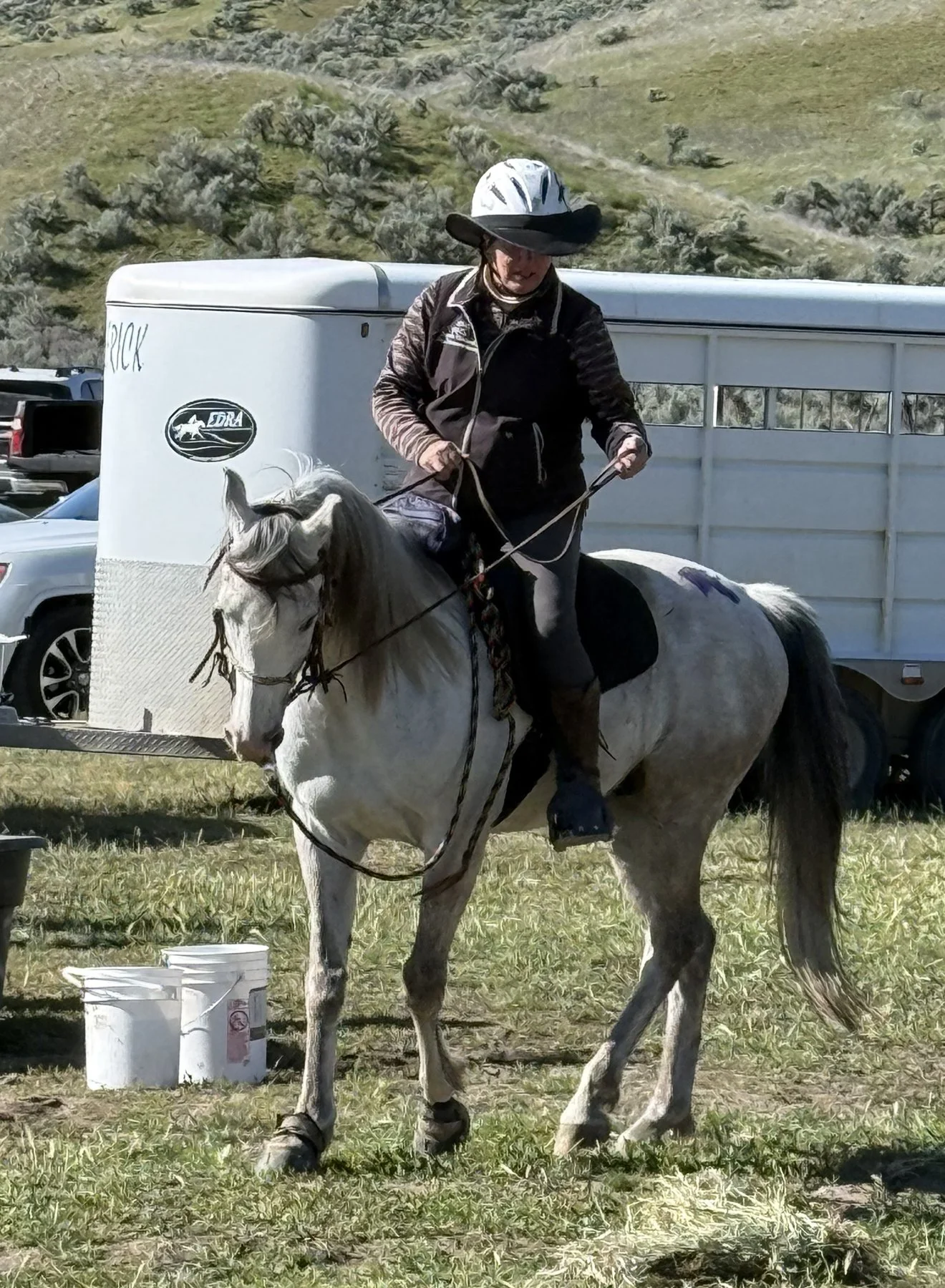
Going through part of Atlas’ regular warm up
Moving his weight from shoulder to shoulder
Throughout your daily rides, develop your language of "slow down," "stop now!" "Focus here," whatever you need for the race. Make it so, so boring and every day that when you really need it, it's there.
Find another activity to work on between rides to give your horse cross-training physically and mentally. What would you find interesting? I love teaching all the horses lateral movements for balance, strength, and agility. Because I'm so familiar with a lot of things, I might take an endurance horse to an open show and show them in English pleasure. Or working equitation. Or mountain trail. Or ranch riding. Something to work on different skills and different movements. All athletes, at least the smart ones, cross-train.
Remember, THE HORSE comes first! There is no endurance ride, show, trail competition, or anything else without the horse. Be thankful, truly thankful, that this marvelous creature is in your life. And remember, any lack of preparation on your part is not the horse's fault. Look in the mirror first. Be willing to examine your own motives and priorities. Because the horse never signs on the dotted line to haul your butt 25-100 miles, just because we thought it would be fun.
I hope this gives you something to think about because these things are applicable to so many activities. I know we want to celebrate our beloved horses and show just how marvelous they are!
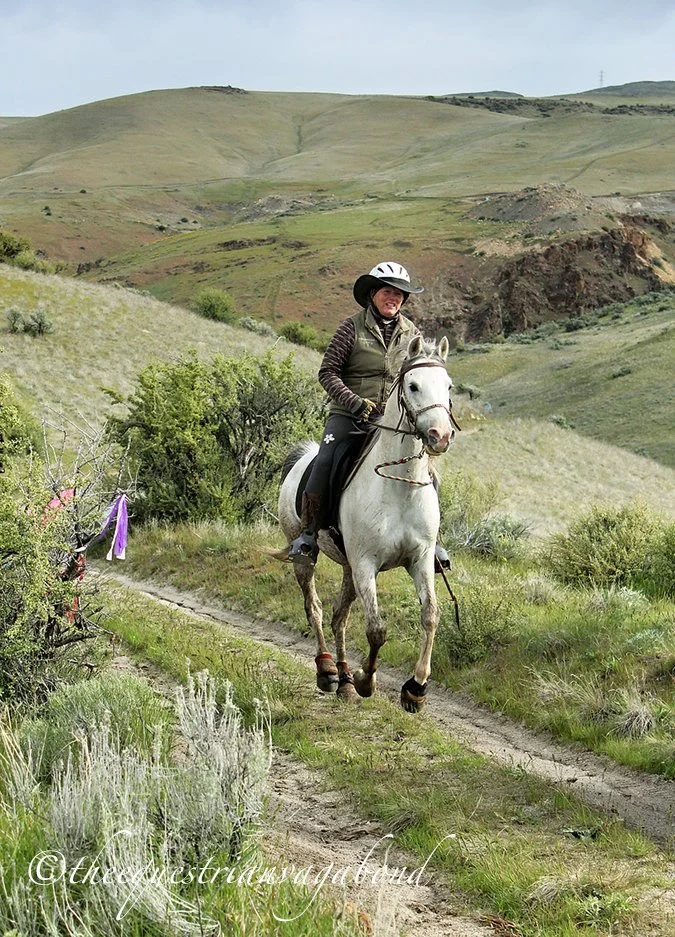
The goal is a content horse that understands the activity with a steady, quiet mind.